

Hugup was tested in four stages. It started with our own research into pregnancy back and pelvic pain. A university biomechanics laboratory then measured Hugup against the three most common types of maternity support. Finally, the Institute of Mother and Child, a research institute specialising in maternal, perinatal and child health, ran a two-part assessment: a panel of five specialists, and a home-use test with 42 pregnant women.
In-house
Research & insights
We reviewed published evidence on lumbopelvic pain in pregnancy and the support products already on the market, with input from biomechanical engineers, pelvic health physiotherapists and gynaecologists.
Two design rules came out of it and were carried into every later stage: act on all three pain sites (upper back, lower back and pelvic girdle) rather than one, and do it without compressing the bump.
University biomechanics laboratory
Biomechanical testing
A growing bump shifts the centre of gravity forward and makes the muscles that hold the body upright work harder. Hugup was compared with the three most common types of maternity support (a compression top, a strap harness and a pregnancy belt) to see how well each counters this. Four women wore a simulated pregnancy bump, so every garment was tested on the same bodies under the same load. Their balance, walking and muscle effort were measured with lab instruments; while how Hugup feels in a real pregnancy was tested in stage 04.
Hugup gave the best balance of the four garments and the gait closest to how participants walked without the bump. Compared with wearing no support garment, it also reduced muscle effort in the upper back and shoulders while walking and getting up from a chair, and in the lower back, most noticeably when walking uphill.
Institute of Mother and Child
Expert panel testing
The Institute first reviewed our product documentation, from raw materials and accredited lab results to the production process and instructions for use. It confirmed the product’s general and health safety for its intended users, women in the third trimester.
A panel of five specialists then assessed its functional properties, safety and suitability for everyday use: a specialist in obstetrics, gynaecology and perinatology, the acting Head of Medical Rehabilitation, a certified perinatal care therapist, a midwife, and a physiotherapist and osteopath. Each rated Hugup on a five-point scale.
Result
4.8 / 5
positive

Institute of Mother and Child
User testing
A home-use test run through the Institute’s own research panel. 42 pregnant women at 30–37 weeks, none of whom had used a comparable product before, wore Hugup as intended for 14 to 60 days, typically four to seven times a week, one to three times a day, for two to ten hours, in some cases all day. Findings were gathered by questionnaire and interview.
42
pregnant
women
30–37
weeks
of pregnancy
14–60
days of use
2–10h
per wear
In user testing, participants rated the product as follows:*


Positive Opinion
Institute of Mother and Child
No. IMIDOP:5611/2/2024:2026:05092028
* The results reflect the individual experiences of the participants in the test.
"I'm pregnant with twins, so the relief from the pressure on my spine and pubic symphysis was very comfortable and helpful. It's a huge help with multiple pregnancies."
"It fits like a second skin and doesn't restrict movement. After putting it on, the unpleasant tension and pain in my lower back significantly decreased."
The five questions we always get
Is Hugup a medical product?
No. Hugup is maternity support wear, designed to ease everyday pregnancy discomfort and help you move with confidence. It isn’t meant to diagnose, treat or replace medical care. Hugup has received a Positive Opinion from the Institute of Mother and Child, a leading Polish research and medical institution in maternal and child health. If you have a medical condition or a high-risk pregnancy, check with your doctor or midwife before wearing it.
Is it safe for the baby? Doesn’t it compress the bump?
Hugup supports your bump; it doesn’t squeeze it. When it fits well, it feels like a gentle lift from underneath: light and supportive, never tight. If you ever feel pressure, for example while sitting or driving, unfasten the side buckles or loosen the belt a little. For comfort, take a 15-minute break every hour, and avoid wearing it for long periods while sitting or lying down.
What makes Hugup different from the pregnancy belts already on the market?
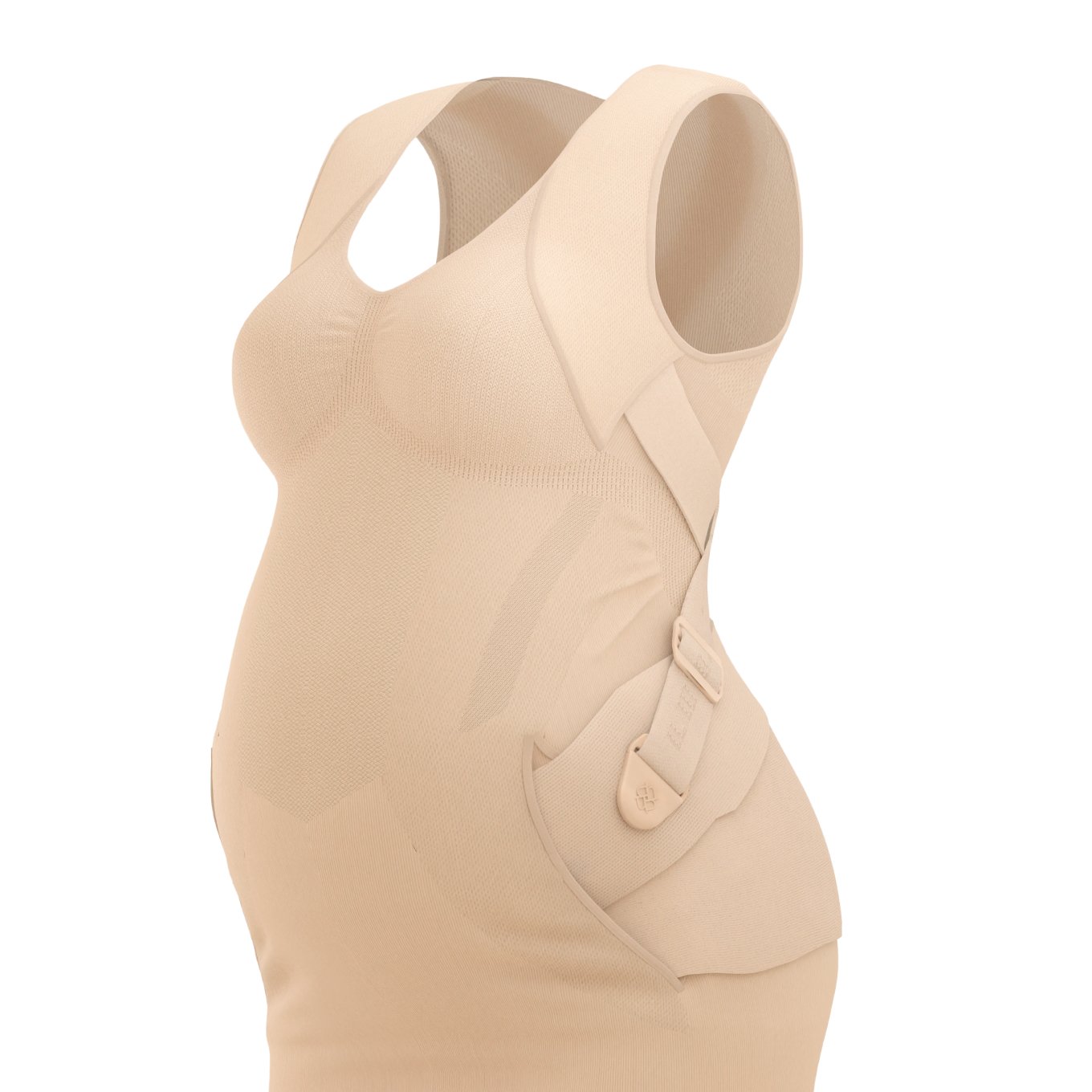
Hugup was created specifically to move beyond the limitations of traditional belts. Many women abandon maternity support garments because they are ineffective, too hot, itchy, or put too much pressure around the belly. Hugup was developed to redistribute belly weight across the body, reduce pressure on the lower back and pelvic area, and support posture, mobility, and everyday comfort in a more wearable form.
Why is Hugup more expensive than a standard pregnancy belt?
Because Hugup is not a standard pregnancy belt. It was designed as a more advanced supportwear solution that redistributes abdominal load across the torso, rather than concentrating pressure in one area. It is made from breathable, soft, stretchy material with antibacterial finish and odour control, and it was developed to be wearable in everyday life rather than tolerated for short periods only. It has also been validated in a biomechanical lab, reviewed by an interdisciplinary expert panel, and user-tested with 42 pregnant women. That combination of design, materials, and validation is what places it in a different category from a typical support belt.
Which women is Hugup most suitable for?
Hugup is most suitable for women whose discomfort begins to affect everyday life during pregnancy - especially in the later months, when posture changes, abdominal weight increases, and movement becomes more demanding. It may feel particularly relevant for women experiencing back, pelvic, or pubic discomfort, as well as those who need more belly support and lift in order to stay more comfortable and mobile day to day.
Work with us
Write to us directly or book a call with our team.